
January 09, 2026
Dark vs. Milk vs. White Chocolate: What’s the Difference?
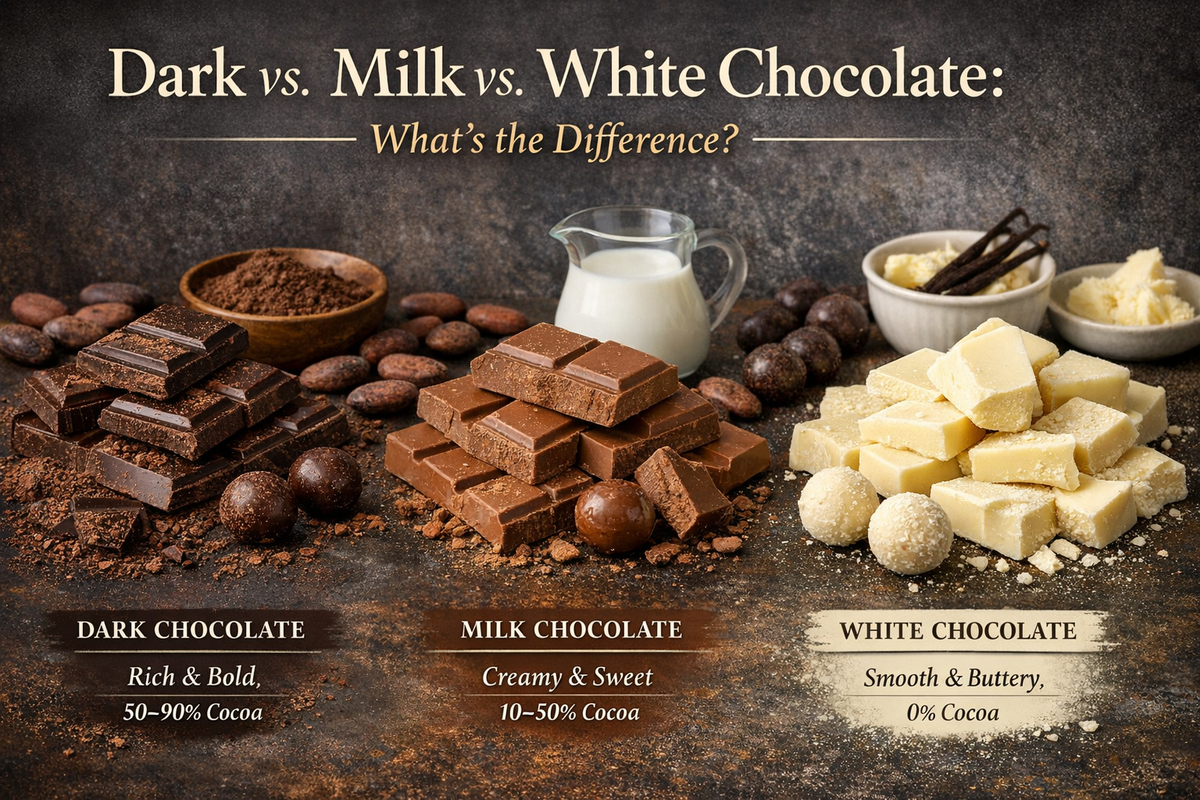
Chocolate lovers have strong opinions about their favorite type — some love the rich intensity of dark chocolate, others crave the creamy sweetness of milk chocolate, and some can’t resist the smooth, vanilla-forward profile of white chocolate. But beyond taste, these three varieties are surprisingly different in composition, flavor chemistry, and even how they’re used in desserts.
Here’s a breakdown of what sets them apart — and how to choose the right one for every occasion.
🍫 1. What All Chocolate Has in Common
Authentic chocolate starts with ingredients derived from the cacao bean:
-
Cocoa solids (or cocoa powder)
-
Cocoa butter
-
Flavor compounds + polyphenols
-
Sometimes sugar, milk, or vanilla
Where the three varieties diverge is how much cocoa is included and how it’s balanced with sugar and dairy.
🍫 2. Dark Chocolate
Composition
Dark chocolate is made from:
-
Cocoa solids
-
Cocoa butter
-
Sugar (minimal compared to other chocolates)
Notably, it does not include milk — which is why it’s also referred to as "plain" or "bittersweet" chocolate.
Most dark chocolate sold today ranges between 50%–90% cocoa content.
Flavor Profile
Dark chocolate is known for its:
✔ bold cocoa flavor
✔ subtle bitterness
✔ lower sweetness
✔ complex notes (fruit, nutty, roasted, floral depending on origin)
Because of its intensity, dark chocolate is popular for pairing with:
-
Coffee
-
Red wine
-
Spirits (especially bourbon & rum)
-
Nuts & fruit
Nutrition & Health Notes
Dark chocolate is highest in:
-
antioxidants (flavanols)
-
polyphenols
-
minerals (iron, magnesium)
It’s also lower in sugar and sometimes used in wellness markets because of these benefits.
🍫 3. Milk Chocolate
Composition
Milk chocolate softens dark chocolate’s sharp edges by adding dairy. It typically contains:
-
Cocoa solids
-
Cocoa butter
-
Milk powder or condensed milk
-
Sugar
-
Optional vanilla
Commercial milk chocolate usually sits at 10%–50% cocoa, though premium versions can go higher.
Flavor Profile
Milk chocolate is:
✔ creamier
✔ sweeter
✔ mild and comforting
✔ smooth in texture
Its softer profile makes it universally appealing — especially to kids and dessert lovers.
Usage
Milk chocolate is widely used for:
-
bars & bonbons
-
truffles
-
chocoballs
-
toppings
-
baking
-
gifting
It melts gently, making it ideal for enrobing and coatings (like chocolate-covered nuts or filled chocolates).
🍫 4. White Chocolate
Here’s the twist: white chocolate contains no cocoa solids at all.
Composition
White chocolate uses only:
-
Cocoa butter (from the cacao bean)
-
Milk
-
Sugar
-
Vanilla or flavor extracts
Since cocoa butter has a naturally delicate, buttery flavor, white chocolate is prized for its smooth and creamy texture.
Flavor Profile
White chocolate is:
✔ sweet and milky
✔ vanilla-forward
✔ buttery & soft
✔ mild with no bitterness
It pairs exceptionally well with:
-
berries (especially strawberry & raspberry)
-
citrus
-
matcha
-
caramel
-
coffee
🍫 5. Taste Differences at a Glance
| Chocolate Type | Cocoa Content | Sweetness Level | Texture | Best For |
|---|---|---|---|---|
| Dark | 50–90% | Low | Firm | Wine pairings, tasting, baking |
| Milk | 10–50% | Medium | Creamy | Gifting, snacking, coatings |
| White | 0% | High | Very creamy | Desserts, berries, flavor contrasts |
🍫 6. Which Chocolate Should You Choose?
It depends on your goal:
→ For pure chocolate flavor: choose dark chocolate
→ For smooth and familiar sweetness: choose milk chocolate
→ For dessert contrast and creaminess: choose white chocolate
If you're building dessert boards, snack mixes, or gift boxes, combining all three levels gives the best sensory variety.
🍫 7. Why Premium Chocolate Matters
Not all chocolate is created equal. Higher-quality chocolate tends to use:
✔ real cocoa butter instead of vegetable oils
✔ higher cocoa percentages
✔ fewer additives
✔ slower roasting for better flavor
✔ natural vanilla instead of artificial flavors
These factors produce more nuanced tasting experiences and smoother melt-in-mouth textures.
🍫 Final Thoughts
Dark, milk, and white chocolate each offer something different — from bitterness and complexity to sweetness and creaminess. Understanding these distinctions not only helps you choose better chocolate for recipes, pairing, gifting, and snacking, but also helps you appreciate the craftsmanship behind premium chocolate products.